
Centralized display operations with real-time operational visibility
A controlled in-house digital-signage platform that moves clinic display operations from fragmented manual updates to centralized, role-aware and observable delivery.
Digital Platforms
In-house healthcare digital-signage platform built for 30 clinic screens, centralizing departments, clinics, doctors, display players and live content operations in one controlled system.
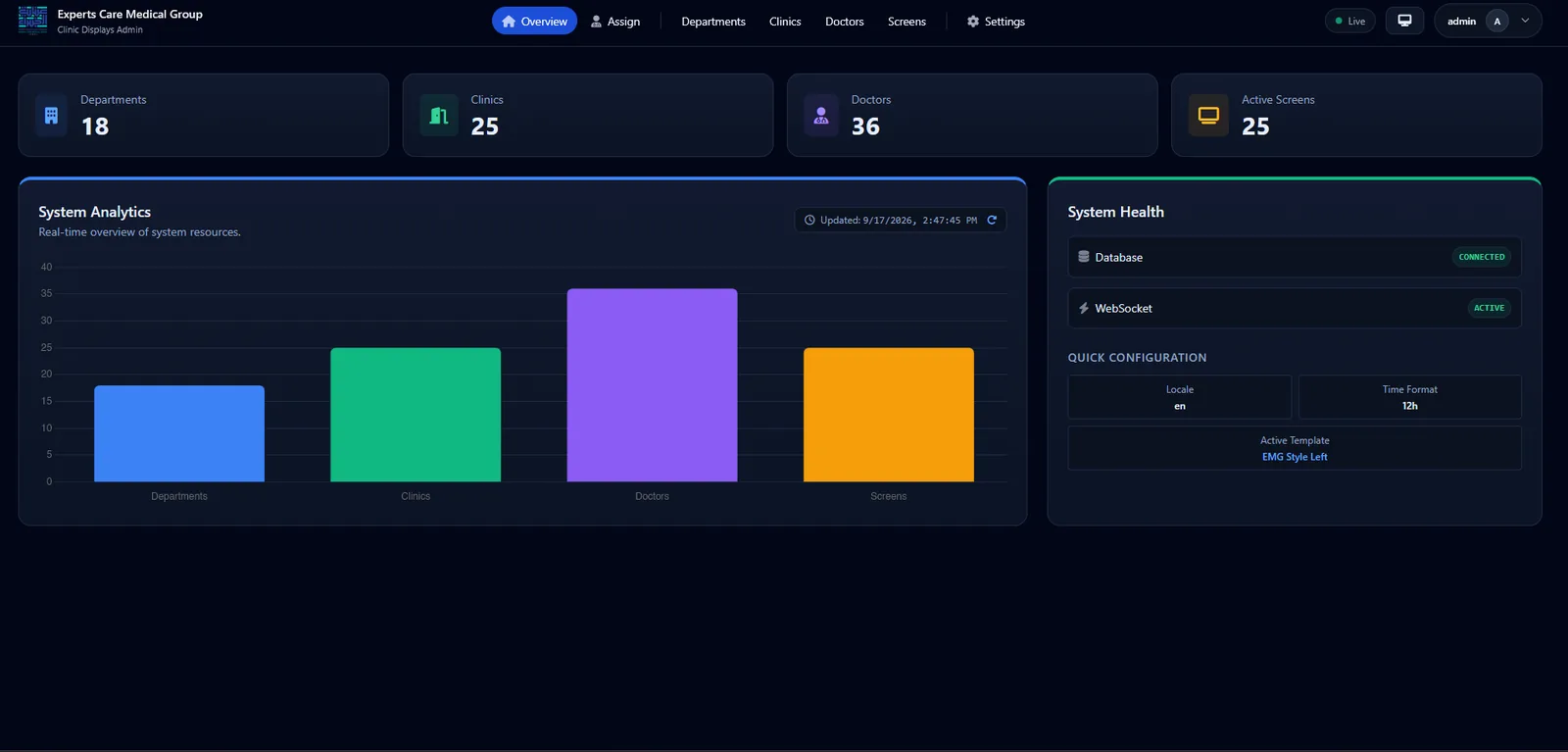
A controlled in-house digital-signage platform that moves clinic display operations from fragmented manual updates to centralized, role-aware and observable delivery.
Healthcare teams needed a consistent way to manage departments, clinics, doctors, screen assignments and bilingual content across a live clinic environment.
Ahmed led solution design, technical direction, in-house development and deployment coordination, translating operational display needs into a supportable platform.
Project in practice
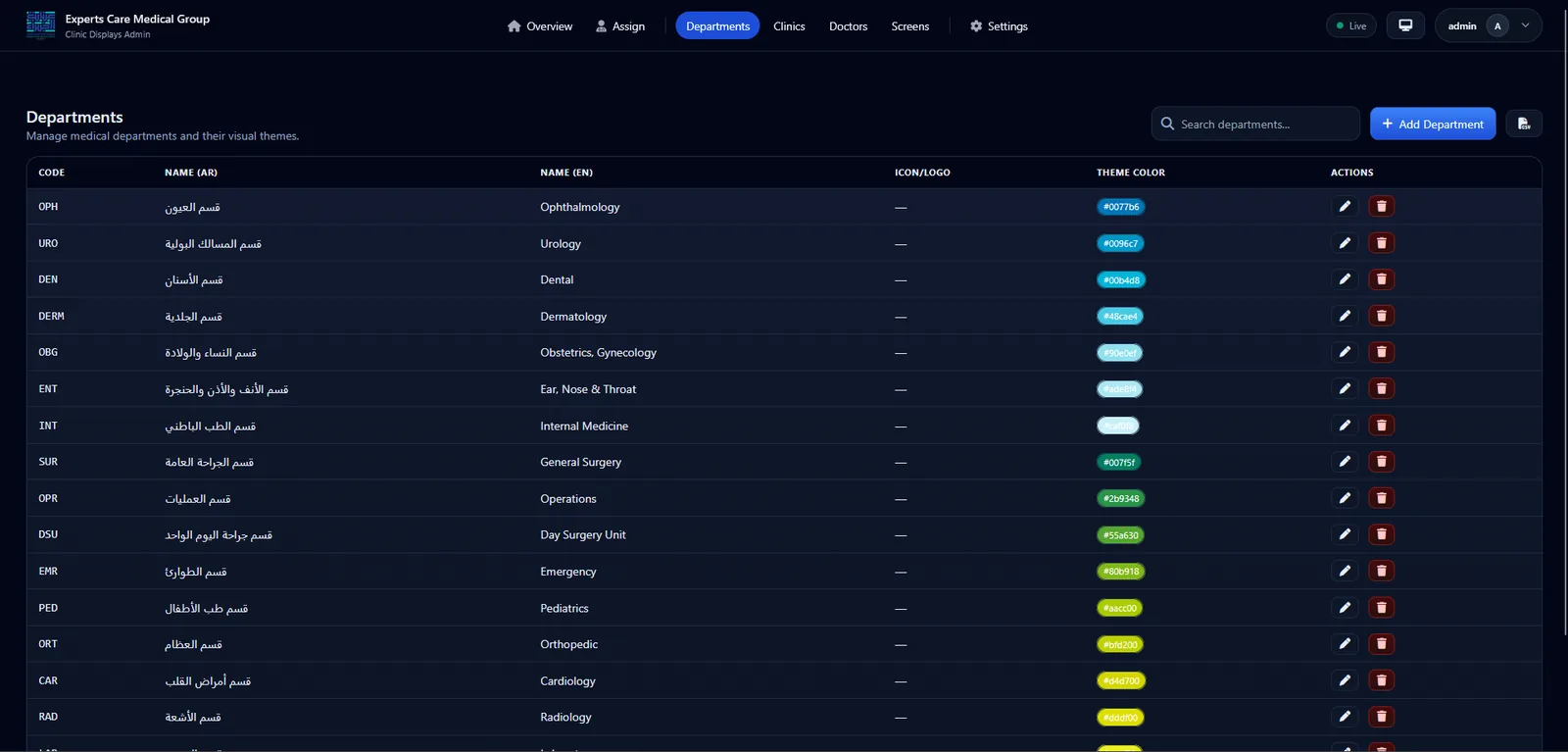
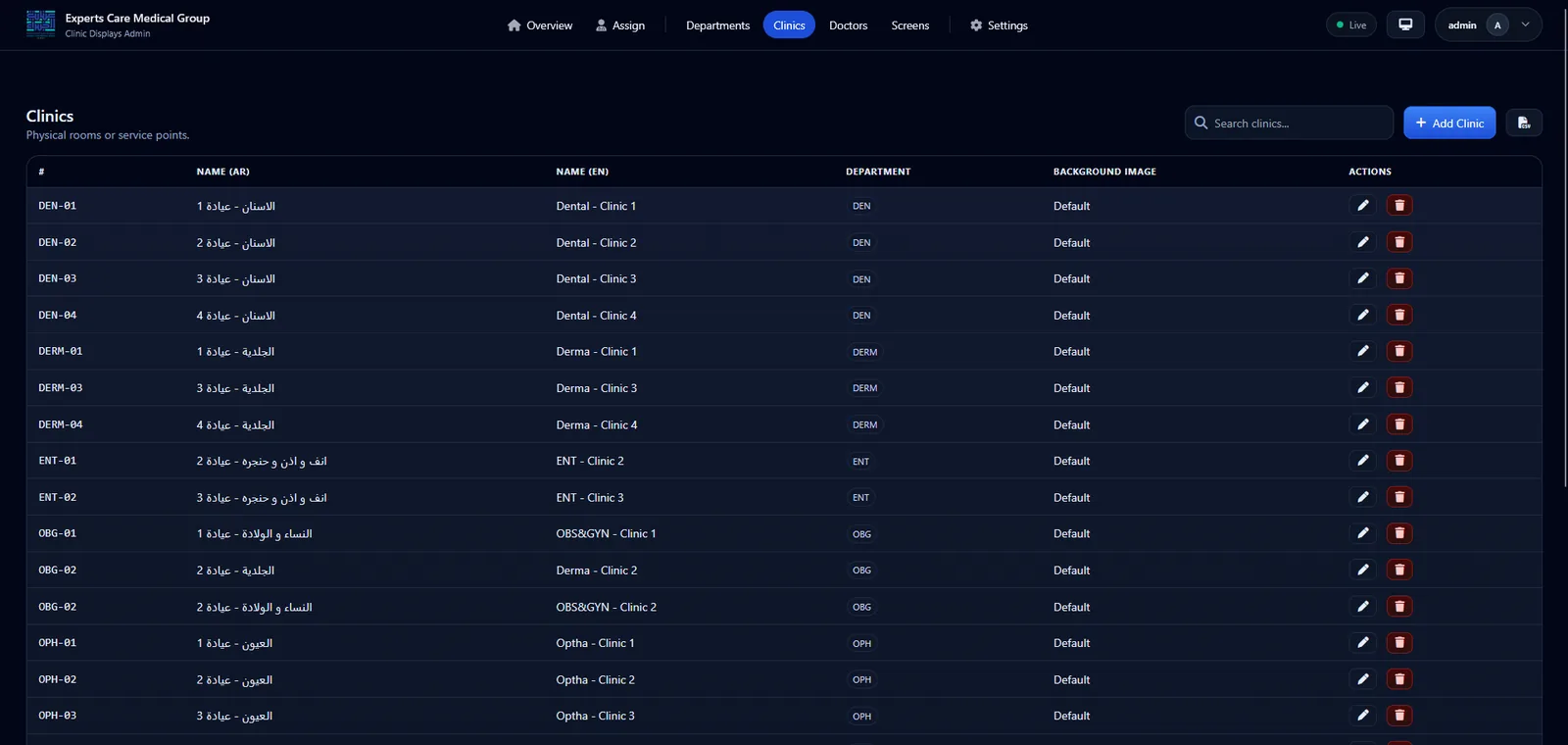
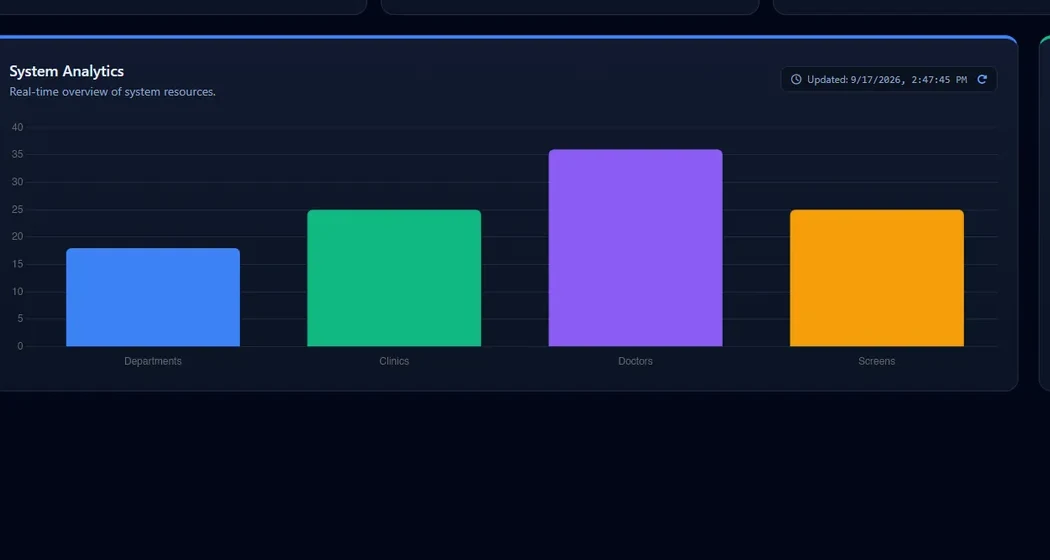
The administration model brings departments, clinics and their display context into a controlled workflow, replacing fragmented per-screen changes with a shared operational view.
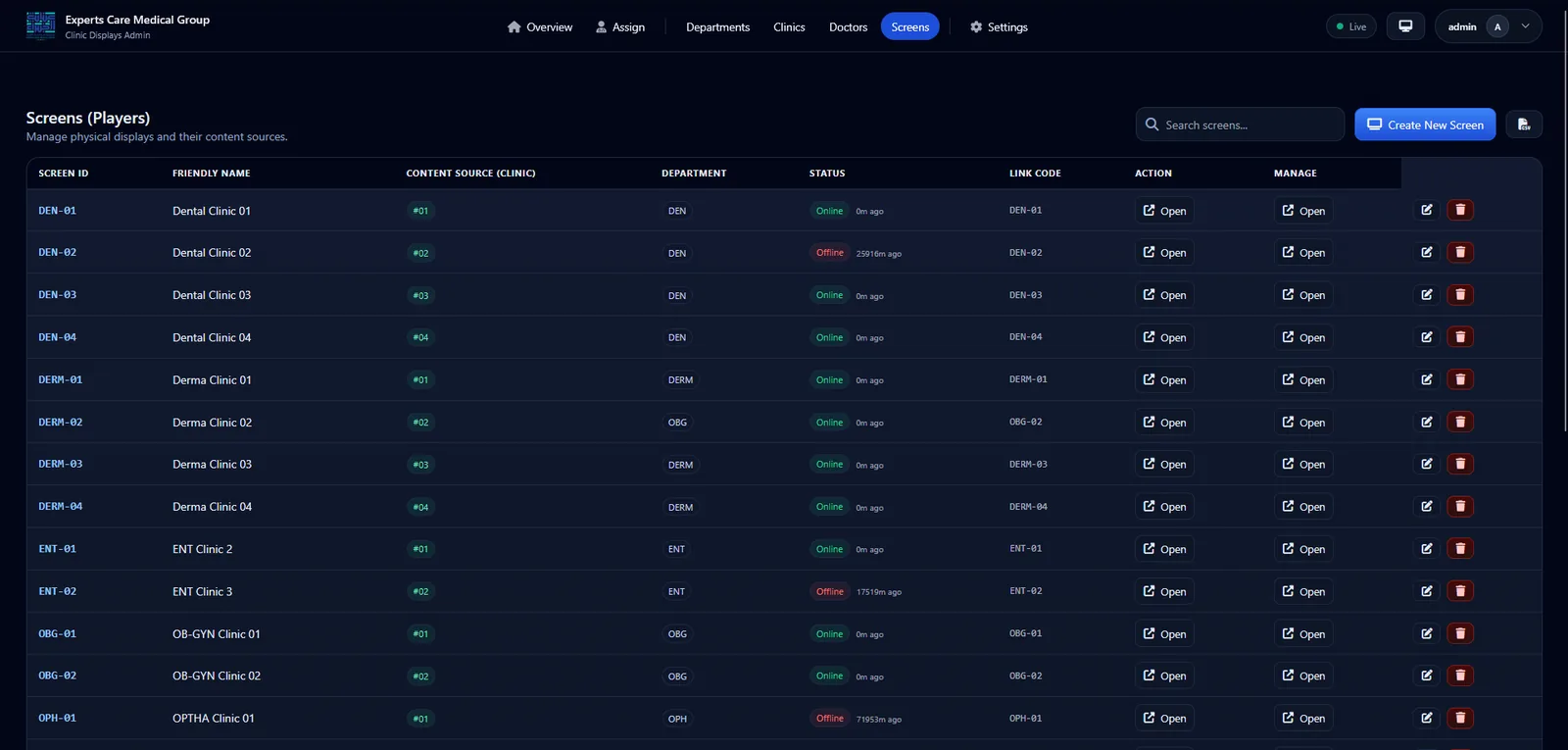
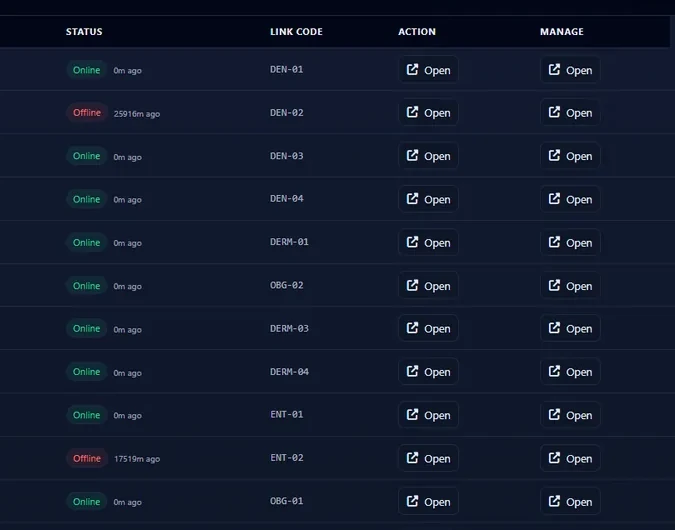
Monitoring views show display endpoints as managed operational assets, with visible status and assignment context for day-to-day support.
Environment: Experts Care Medical Group healthcare operations with managed Android display endpoints and centralized operational administration.
A Node.js and SQL Server application uses controlled administration, WebSocket updates and managed display players to keep approved content aligned across clinic screens.
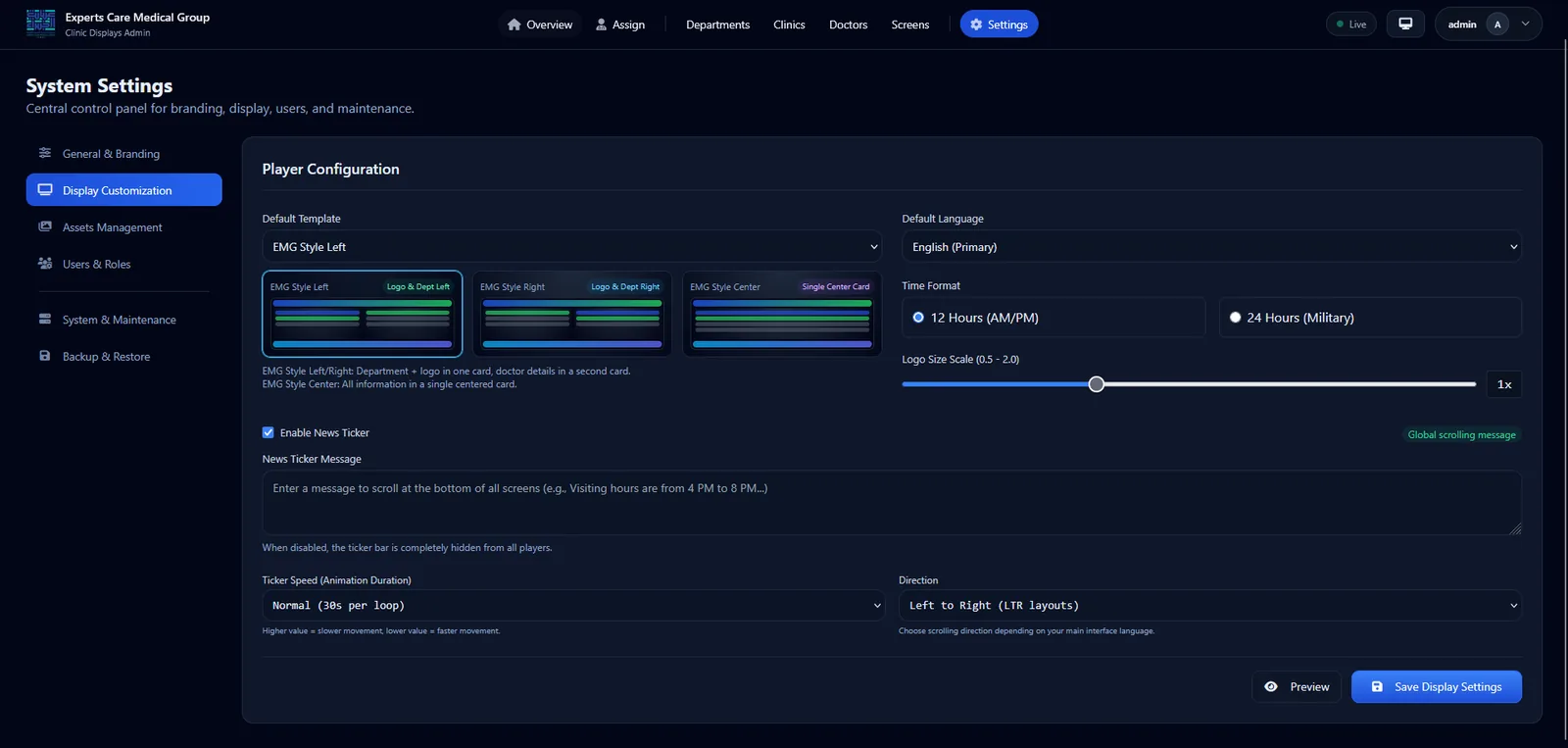
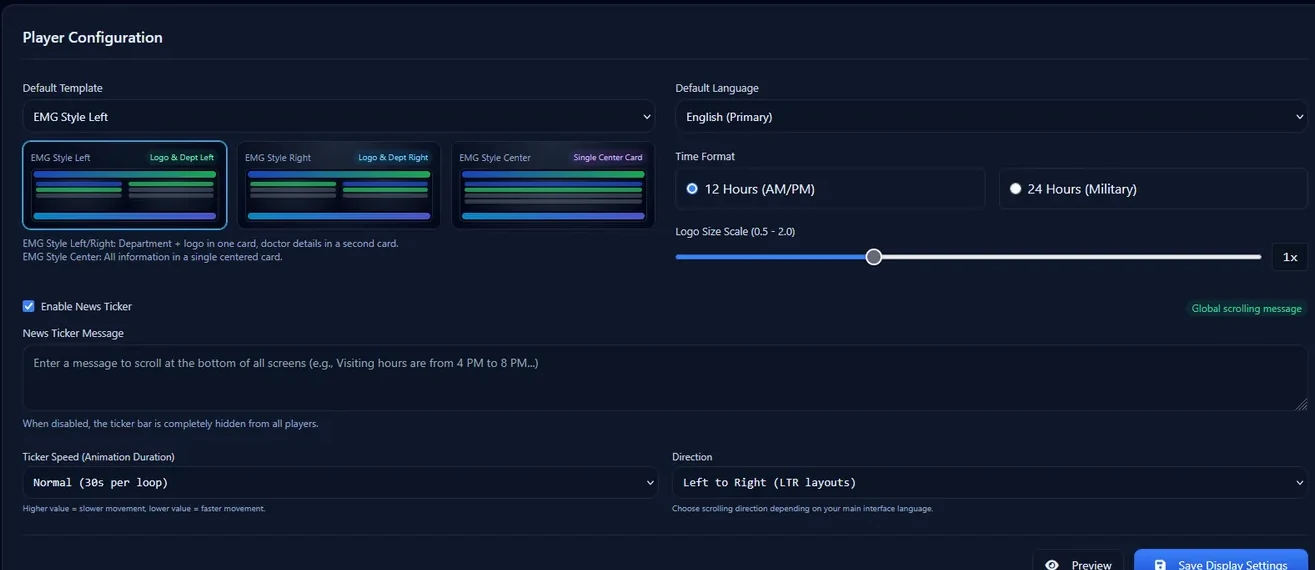
Templates, language and presentation controls are administered deliberately so approved content can remain consistent across clinic-facing displays.
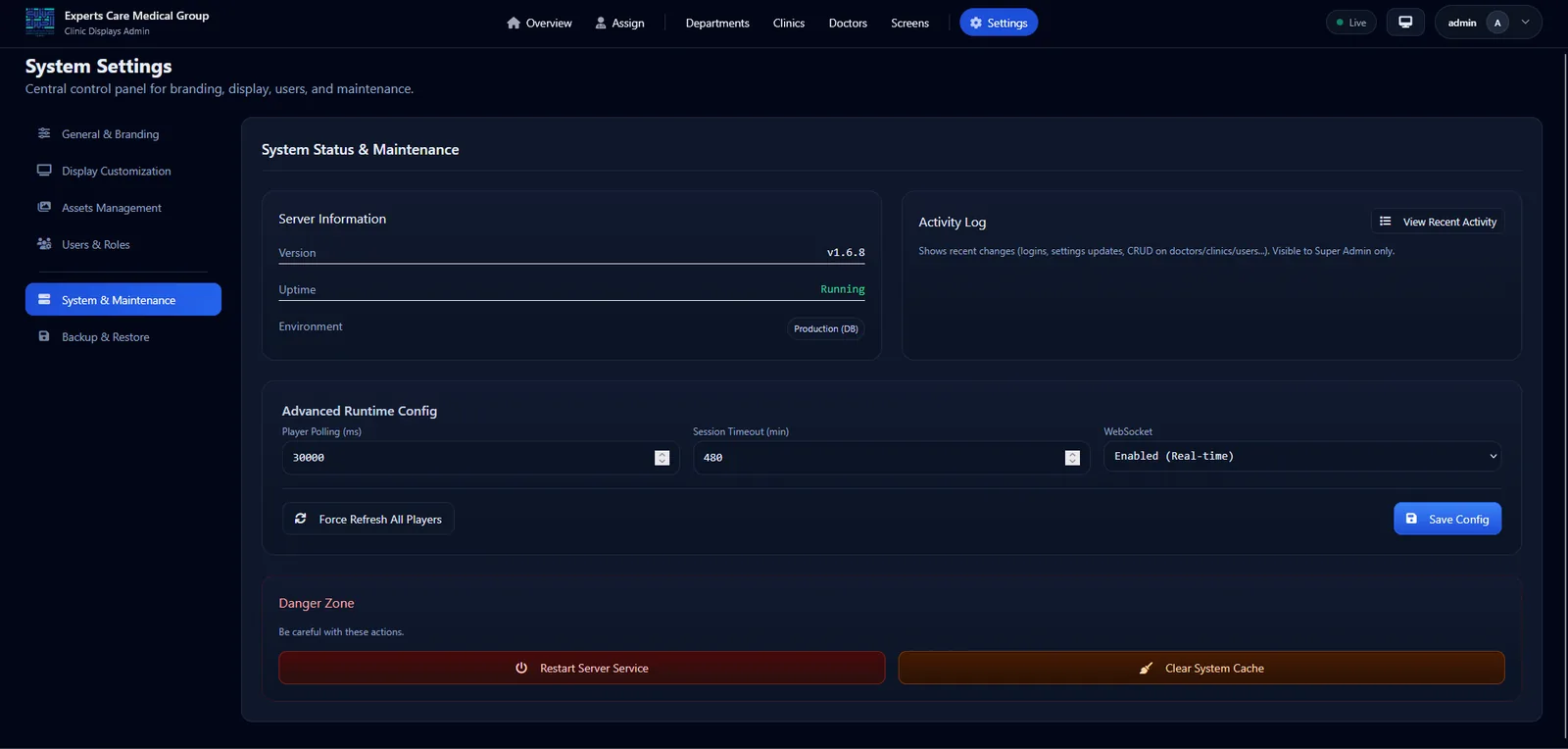
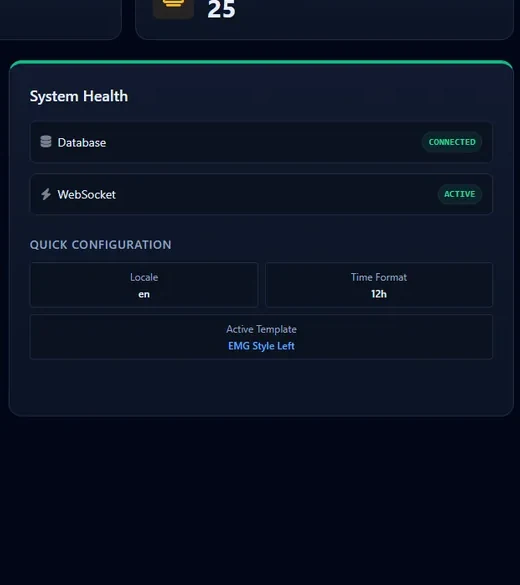
Sanitized service views demonstrate the operational focus on observable player and maintenance state while keeping private infrastructure detail out of the public record.
Technology
The stack and platforms associated with this project.
Selected production views from the in-house Clinic Display System and its administration interface.
The gallery excludes credentials, backup paths, private infrastructure detail and patient information. Selected operational screens are presented only where suitable for a public professional portfolio.
Solution architecture
The major functional layers and how they work together.
Browser-based administration for clinical directories, assignments, branding and screen operations.
Node.js services coordinate application logic with SQL Server-backed operational records and settings.
WebSockets propagate approved changes and connection state to active players with immediate refresh behavior.
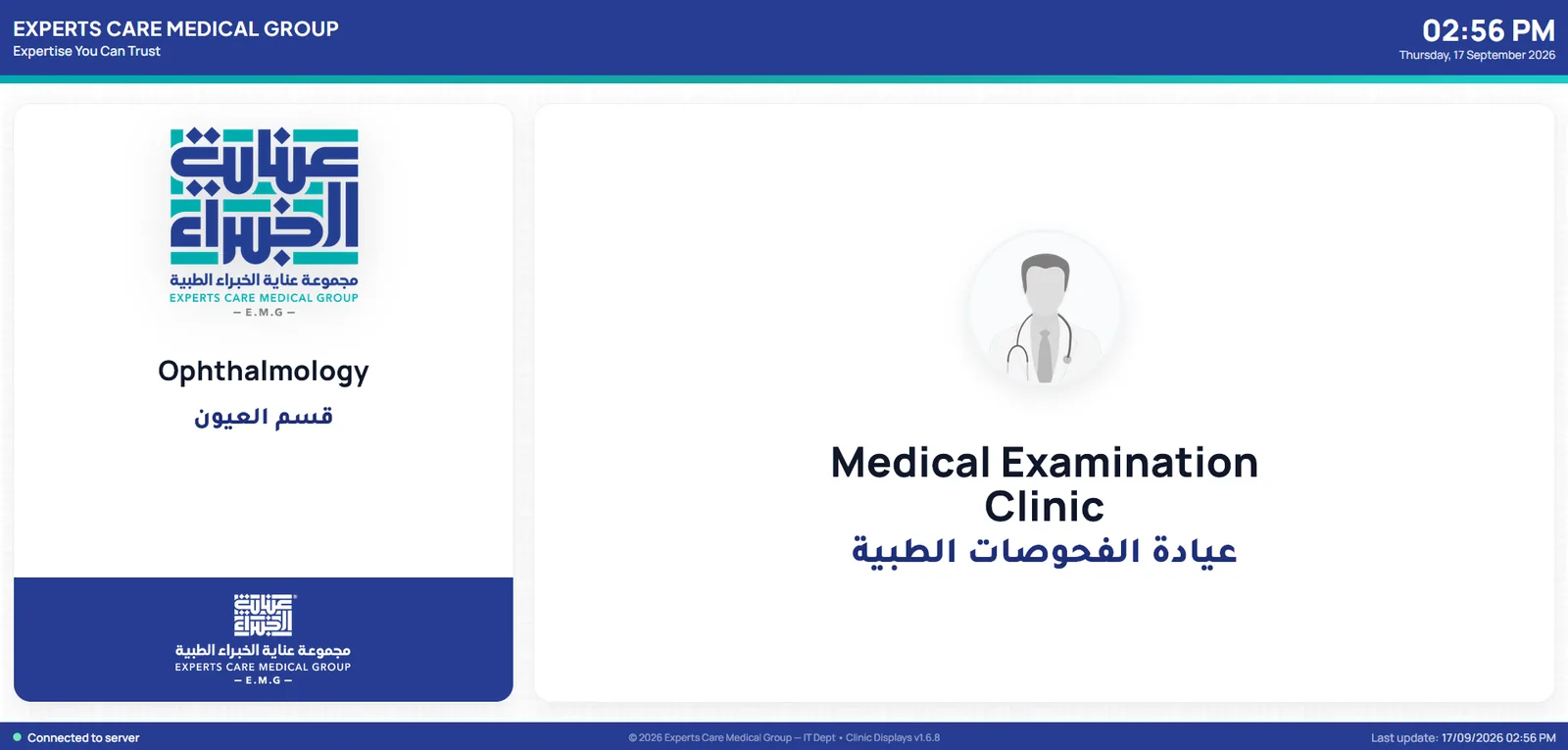
Managed Android display endpoints render the public-facing bilingual clinic experience and report connection state.
Operational footprint
Selected metrics and characteristics that show the practical scope of the implementation.
In-house deployment footprint
WebSocket-driven synchronization
Core capabilities
The capabilities that make the project useful in day-to-day operations.
One operational console for departments, clinics, doctors, screens, assignments and presentation settings.
WebSocket-driven updates keep connected clinic displays aligned with administrative changes without manual refresh cycles.
Central player inventory exposes online/offline state, content source, link codes and operational actions.
Arabic and English display templates support configurable branding, time formats, logos and scrolling messages.
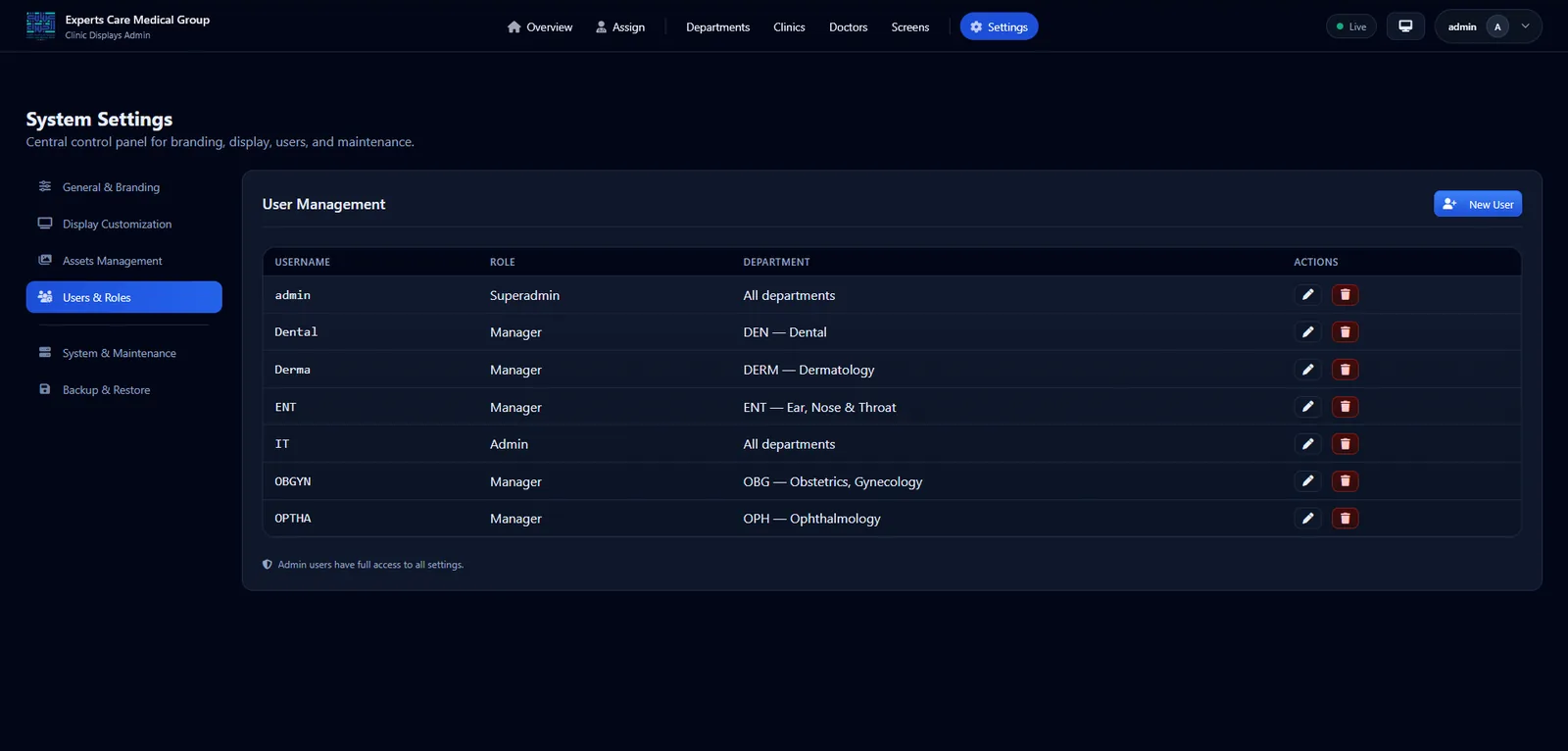
Administrative roles and department-scoped access separate platform control from day-to-day operational management.
Runtime health, database connectivity, service status and maintenance controls support stable day-to-day operation.
Project visuals
Selected implementation views that help explain how the project works in practice.
Professional connections
Explore related experience, capabilities and projects that provide additional context.
Related insight
These field notes explain the operational principles behind related project decisions.
Knowledge map
Explore related projects, field notes and practical resources around the same technology area.